Physical Address
304 North Cardinal St.
Dorchester Center, MA 02124
Physical Address
304 North Cardinal St.
Dorchester Center, MA 02124
Follow-up to Part 1: Ghost Flood-Control Scandal
That huge budget scandal blew up and got everyone furious. But the anger didn’t just fizzle out—it turned into real action, pulling together all sorts of groups. What started as “give us our money back” has grown into bigger calls for real accountability and fixing the broken system.
Missed Part 1? Check it here: [link to infowider.com article]
It’s been about ten days since that first post, and honestly, things haven’t cooled off at all. If anything, it’s picked up steam and spread like wildfire across the country. Back then, the big question was “Where did all that money go?” Now, it’s turning into something heavier: “Is this going to shake the whole government to its core?”
I’ve been keeping an eye on this through reports from Reuters, Philstar, and folks on X posting from the ground. What began as a financial corruption scandal is now starting to look like a real test for Philippine governance under Marcos Jr.
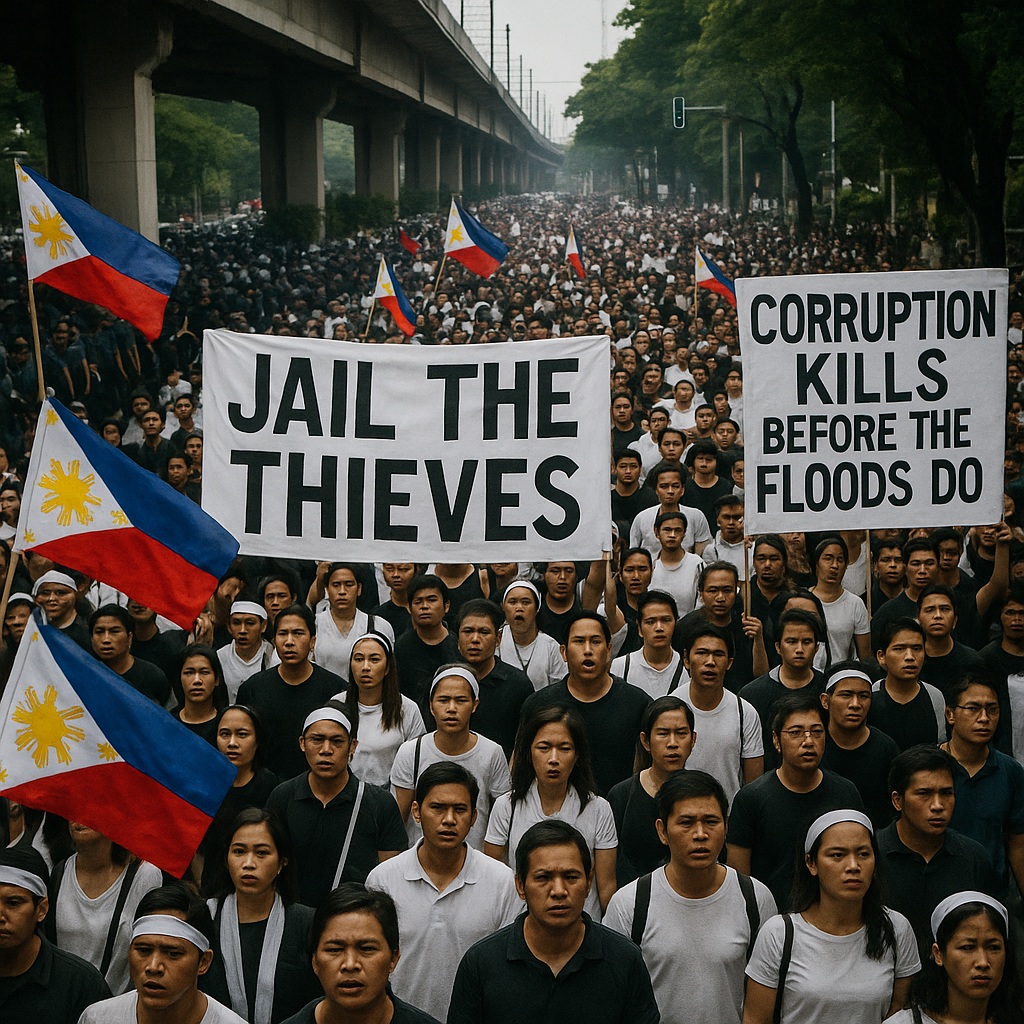
Rizal Park and the EDSA area were packed again on Bonifacio Day. No exact numbers from officials, but outlets like The Guardian are saying tens of thousands showed up—some estimates even hit 100,000 across sites. People waving white ribbons, holding Masses, and marching through the streets.
Slogans like “Jail the thieves” and “Corruption kills before the floods do” were everywhere. It felt like more than just a protest; it was folks coming together, from all walks of life.
The government deployed around 17,000 police and blocked roads to Malacañang, which says a lot. Even the military had to come out and deny any coup rumors—88 senior officers signed off on that statement. When they bother to say “no coup,” you know tensions are high.
It’s not just Manila anymore. In Angeles, about 2,000 gathered; Baguio had 1,500; even smaller spots like Narvacan saw 800. Students linking arms with workers, priests standing next to business owners, and LGBTQ+ groups joining the white-ribbon crowds. That’s not just more people—it’s broader support, making the movement tougher to ignore.
The demands are sharpening up too: a full transparent probe, better budget checks, and actually putting people in jail while getting the money back. What began as vague outrage is turning into solid plans.
Down in Bacolod, 27 groups teamed up and drew thousands—expecting around 7,000. Cebu had Masses followed by marches; Iloilo and Cagayan de Oro saw waves of young people in white ribbons.
With the Catholic Church backing this hard, it’s not just crowds anymore—it’s organized, with direction. The government doesn’t fear a one-off rally; they fear when the church, everyday folks, and memories of past uprisings like EDSA all line up.
The chants kicked off with “return the money.” But now, with ₱110 million recovered, ₱12 billion in assets frozen, and about 37 officials exposed, people want more: trials, convictions, and system fixes.
Politics is shifting—money’s getting seized, arrests are happening. Next up? Indictments, new laws, maybe even alliances breaking apart.
Part 1 was all about tracking the missing billions. This part? It’s about the Philippines deciding its path. Protests popping up everywhere. Slogans becoming actual proposals. Church, civil groups, and academics all on the same page. Even the military speaking up.
This isn’t a blip; it’s a turning point.
A) Heavy crackdown with arrests and tear gas? That could backfire big time and make anger explode.
B) Some concessions and prosecutions? Might calm things short-term, but deeper probes could unravel alliances inside the government.
C) Something like a “Philippine Candlelight Movement”? If Bonifacio Day turns into a regular thing, and the Church keeps pushing, this could become historic.
Corruption sparked it, protests fueled it, and now it’s testing the nation. The page isn’t turned yet—but someone’s finger is already there, ready to write the next chapter. What happens next depends on how the fire burns… and what grows from the ashes.
Data Source Notice
This article is based on openly available news content collected through the GDELT Global Knowledge Graph (GKG). Tone metrics, metadata, and semantic clusters were processed using Infowider’s proprietary analysis pipeline. No information beyond what is contained in the original articles and GDELT data has been added.


