Physical Address
304 North Cardinal St.
Dorchester Center, MA 02124
Physical Address
304 North Cardinal St.
Dorchester Center, MA 02124
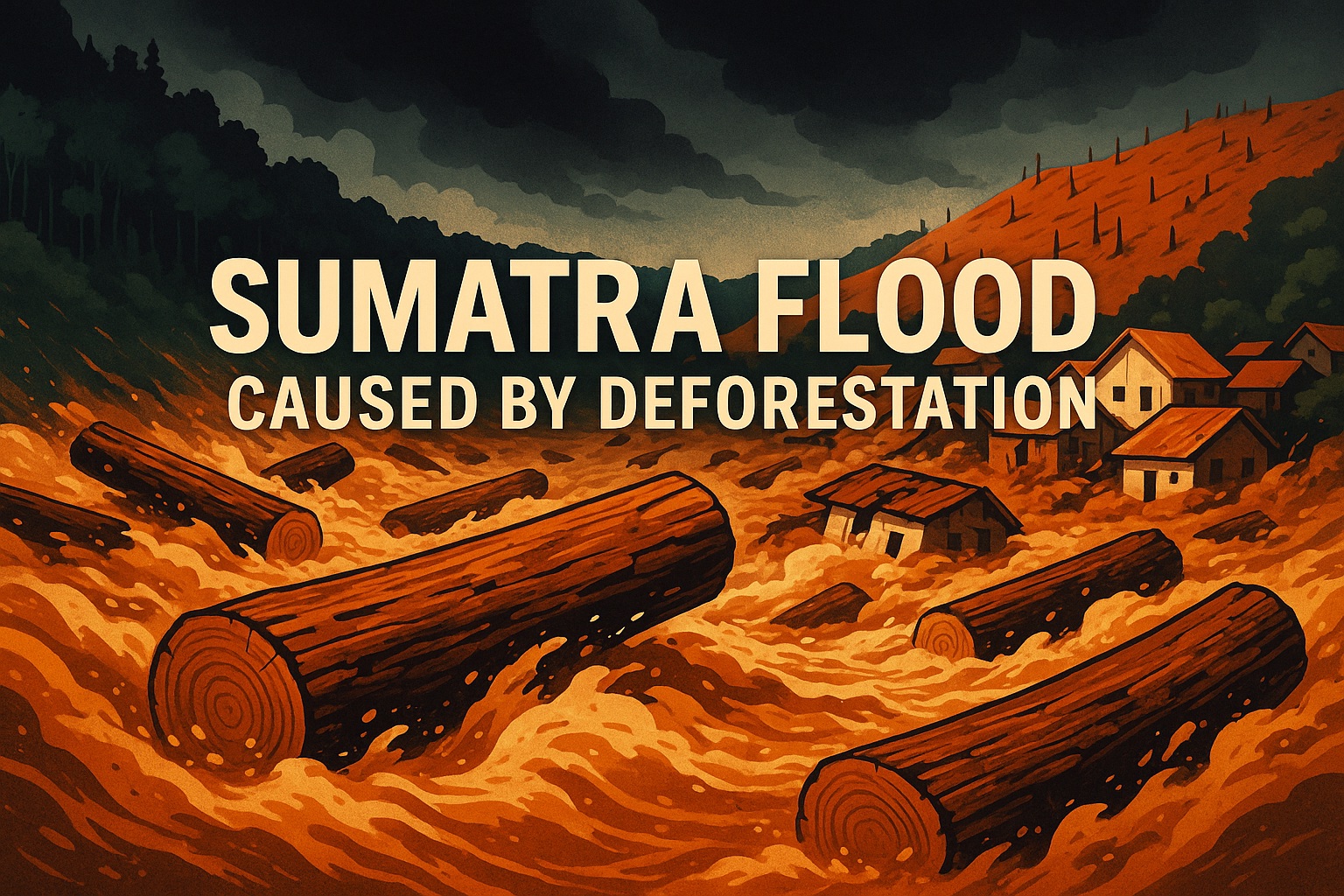
The catastrophe that struck North Sumatra in 2025 wasn’t a typical flood; it was a disaster years in the making—a structural collapse triggered by rain.
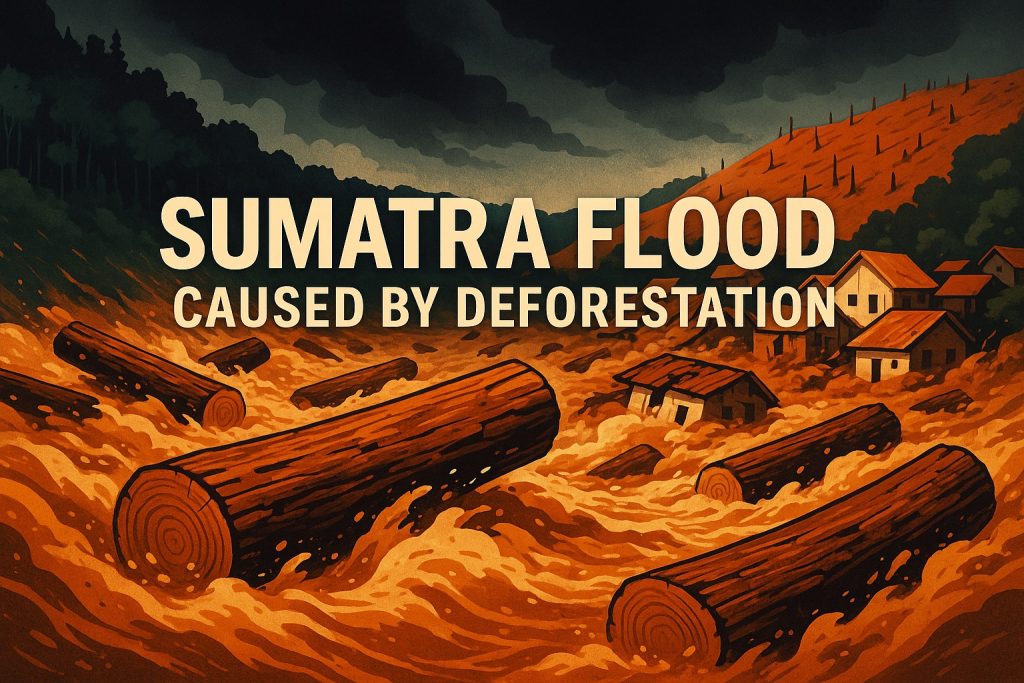
While Cyclone Senyar brought intense, multi-day rainfall, the true devastation came from a terrifying, unexpected source: massive logs—freshly and illegally cut from the forests upstream—that hurtled down the valleys, utterly demolishing entire villages. The casualty count is stark: 166 people confirmed dead and 143 still missing.
Drone footage captured houses being pulverized by timber moving at highway speeds. Investigators and locals quickly confirmed the chilling reality: aggressive, relentless deforestation in the upstream watersheds had stripped the land of its natural defenses. Indonesia’s House of Representatives publicly pinned the blame on illegal logging. Satellite images confirmed rapid forest clearance, replaced by palm oil concessions and logging roads. Seven specific companies were named by the environmental group WALHI for operations that destabilized the slopes long before Senyar even arrived.
The real killer wasn’t the water; it was everything that failed before it.
This disaster is a textbook example of what happens when poor climate resilience meets destructive development models. The logs that wiped out villages weren’t just debris—they were the evidence of a system that treats forests as cheap, disposable capital, ignoring the vital watershed functions that protect communities.
When Cyclone Senyar—a storm that is extremely rare in the Malacca Strait—formed, the region was already defenseless. The result was not mere flooding; it was annihilation.
Cyclone Senyar exposed how climate volatility is changing Southeast Asia’s geography faster than the region can adapt. The formation of a tropical cyclone in the Malacca Strait is essentially a blunt climate warning. The storm hit Indonesia, Thailand, and Malaysia simultaneously, proving that existing regional safety nets are obsolete against today’s climate intensity.
Countries like Japan, Korea, and Singapore, with decades of robust flood-management infrastructure, might have handled this rainfall with disruption, not collapse. Sumatra showed the lethal consequence of prioritizing rapid development over long-term resilience.
The region’s favorite formula—rapid growth, aggressive forest clearance, and infrastructure designed for yesterday’s weather—has reached its limit. Watersheds cleared for palm oil, pulp, mining, and geothermal projects are no longer functioning ecosystems; they are exposed chutes. Drainage systems built for 20th-century rain fail instantly under 21st-century storms. Political incentives focused on short-term profits keep this destructive cycle going.
Sumatra wasn’t an anomaly; it was an X-ray of a regional pattern.
The tragedy in Sumatra demonstrates a harsh new regional law:
“Climate disasters are no longer natural events; they are the predictable and guaranteed outcomes of political and economic choices.”
Forests are not just scenery; they are vital infrastructure. Watersheds are not “unused land”; they are fundamental safety systems. And cyclones are no longer rare oddities; they are previews.
Unless Southeast Asian governments begin treating environmental protection as a matter of national security, the next “hundred-year flood” is already on the calendar.
North Sumatra is not an isolated warning. Just weeks before this disaster, the Philippines uncovered a $10-billion “ghost flood-control” scandal, revealing that thousands of critical infrastructure projects meant to protect citizens from typhoons simply never existed. In climate-vulnerable states, environmental destruction and institutional corruption form the same deadly equation: the system fails long before the storm arrives. Read the full Philippines piece →
Data Source Notice
This article is based on openly available news content collected through the GDELT Global Knowledge Graph (GKG). Tone metrics, metadata, and semantic clusters were processed using Infowider’s proprietary analysis pipeline. No information beyond what is contained in the original articles and GDELT data has been added.


