Physical Address
304 North Cardinal St.
Dorchester Center, MA 02124
Physical Address
304 North Cardinal St.
Dorchester Center, MA 02124
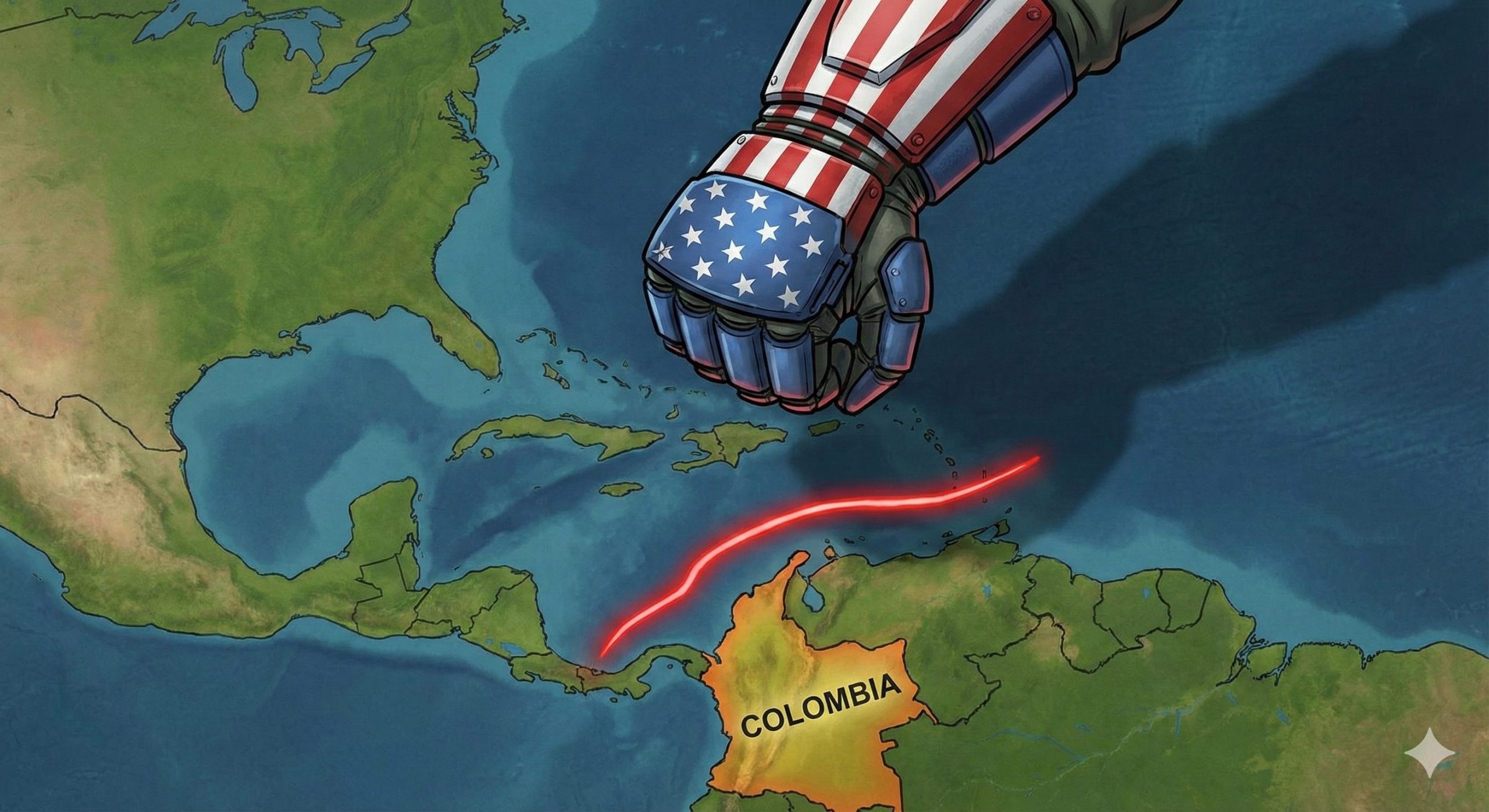
Let’s get real. This isn’t about drugs. Never was. It’s about how the United States uses military force beyond its borders.
When the U.S. began signaling potential military strikes against drug-trafficking nations—including Colombia—the issue quickly moved beyond crime enforcement. What initially looked like a tougher phase of the “war on drugs” escalated into debates over sovereignty, international law, and potential war crimes.
Tracing the actual flow of reporting reveals a different reality: the core issue is not narcotics, but how far Washington believes it can push its military reach outside its own territory.
The chain reaction began with a statement from Donald Trump, who openly suggested that countries linked to drug trafficking could face U.S. military strikes. That message landed squarely in Latin America, Colombia included.
Colombian President Gustavo Petro responded swiftly, warning that such action would amount to a violation of sovereignty—and potentially an act of war. At that moment, this ceased to be a discussion about drugs. A law-enforcement narrative had crossed into the realm of military confrontation and foreign policy escalation.
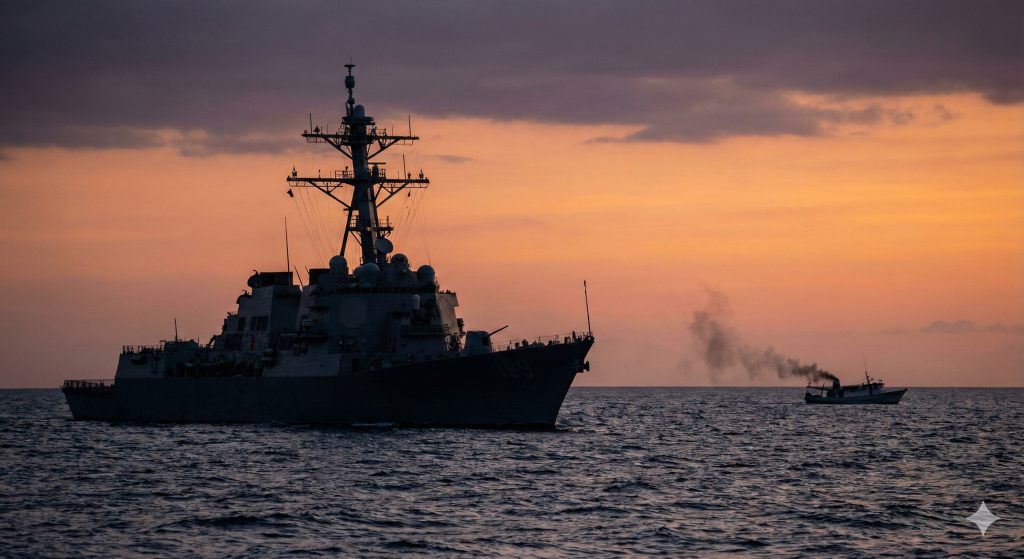
But talk is cheap. What happened next wasn’t. Reports soon emerged that U.S. forces had struck a vessel suspected of drug trafficking in the Caribbean. More alarming were allegations that additional strikes occurred while survivors remained in the water—what is known as a double-tap strike.
U.S. Senator Mark Kelly publicly stated that such actions could constitute a violation of international humanitarian law. The issue was no longer the legitimacy of a single strike; it became a question of whether the U.S. military treated suspected traffickers not as criminals, but as enemy combatants.
The Pentagon moved quickly to deny claims that there had been any order to “kill everyone.” Both the White House and the Defense Department effectively acknowledged that secondary strikes occurred based on on-scene judgments.
That distinction is not trivial. It signals an implicit admission that drug suspects were not approached as arrest targets, but as elimination targets. Had this truly been routine drug interdiction, Pentagon-level intervention would not have been necessary. By this point, the issue had clearly transformed into a political and military legitimacy crisis.
Eventually, the controversy reached Capitol Hill. Lawmakers from both parties began questioning the legality and authorization of U.S. strikes in the Caribbean. Statements warning that follow-up attacks on survivors could be unlawful made clear that the “drug enforcement” justification was no longer sufficient to shield the action from scrutiny. Once Congress enters the debate, the issue is no longer tactical—it is structural.
Viewed as a whole, the pattern is unmistakable. Drugs were not the underlying driver of these military actions. The U.S. has spent decades deploying military force in the name of drug control without producing lasting results. If anything, such interventions have amplified instability and strengthened organized crime networks.
The repetition of this approach persists for a simple reason: drugs, like terrorism, offer a low-cost justification for overseas military action. The double-tap controversy is particularly revealing, not because it suggests poor judgment, but because it implies a shift in classification—from law enforcement targets to enemy status. At that point, policing logic gives way to battlefield logic.
Geopolitical Implications This episode underscores an enduring assumption in Washington—that parts of Latin America remain zones of conditional sovereignty. Petro’s “act of war” warning should be read as a direct rejection of that hierarchy.
International Law Using drug enforcement as grounds for cross-border military strikes stretches the gray zones of international law. The moment criminals are treated as enemies, the laws of war apply—and so does legal responsibility.
Domestic Politics This approach offers little in terms of real problem-solving. What it does provide is a useful political narrative: decisiveness, strength, and action. Whether it works is secondary. Demonstrating the ability to strike is the objective.
In U.S. foreign military operations, justification is rarely the true cause. Justifications come after power is exercised, not before. Drugs simply happen to be one of the most convenient wrappers available.
If this story is read as another chapter in the war on drugs, nothing meaningful remains. But if it is read as a case study in how, when, and why the United States chooses to project force beyond its borders, the underlying fractures in today’s international order become impossible to ignore.
Data Source Notice
This article is based on openly available news content collected through the GDELT Global Knowledge Graph (GKG). Tone metrics, metadata, and semantic clusters were processed using Infowider’s proprietary analysis pipeline. No information beyond what is contained in the original articles and GDELT data has been added.


