Physical Address
304 North Cardinal St.
Dorchester Center, MA 02124
Physical Address
304 North Cardinal St.
Dorchester Center, MA 02124

When a head of government describes social platforms as a place where law is ignored and harm is tolerated, the statement functions less like moral panic and more like a jurisdictional claim. It recasts the internet from a competitive public square into a space of policing and governance.
That’s why the policy target is not “better behavior.” It is access restriction—blocking under-16s becomes a state-grade infrastructure question: who builds the gate, where it sits, and what it costs to run.
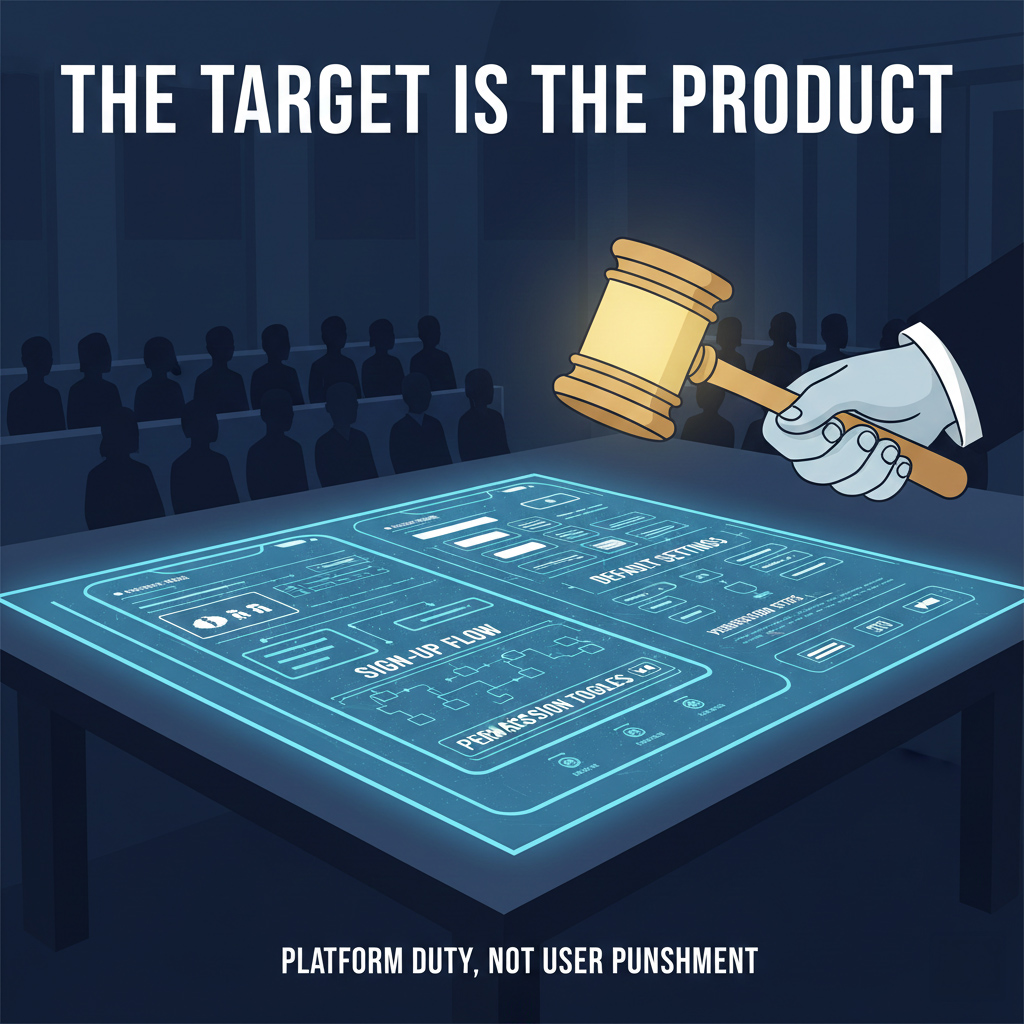
Australia’s approach shifts pressure away from individual wrongdoing and onto platform duty: not “catch every child,” but “make it unreasonably hard for minors to enter.”
The result is structural. “Law” stops being a paragraph in legislation and becomes a default setting—signup flows, permissions, and access controls. Policy finishes on the screen where it says: Continue only after verification.
The checkpoint location has changed. Moderating each post is expensive and imperfect; locking features is cheaper and more reliable.
Discord’s direction signals this shift: accounts can be treated as teen-by-default, while adult settings or age-restricted areas become locked states that require age assurance to unlock.
The defining question is no longer “what did you view?” but “what are you allowed to do?” Access to certain spaces, channels, or high-risk interactions becomes the enforcement surface.
Age assurance doesn’t need to be framed as a surveillance dystopia to be consequential. Its real effect is operational: the service moves from anonymous entry to proof-based entry.
In this model, the user experience changes first: ID upload, video selfie checks, age estimation, retries, false positives, lockouts.
The critical point is not the brand name of the technology, but the exchange: access rights are now traded for verification steps—especially when users attempt to cross into restricted features.
Once the cost of failure is priced as penalties and regulatory exposure, states don’t need to inspect every user. Companies will pre-emptively enforce at scale.
That’s what mass removals represent: not morality, but compliance economics. In Australia, Meta’s reported removal of roughly 550,000 accounts illustrates how enforcement can be outsourced to platforms—quietly, quickly, and at volume.
The pattern is consistent: when liability is externalized, purges become a default operational response.
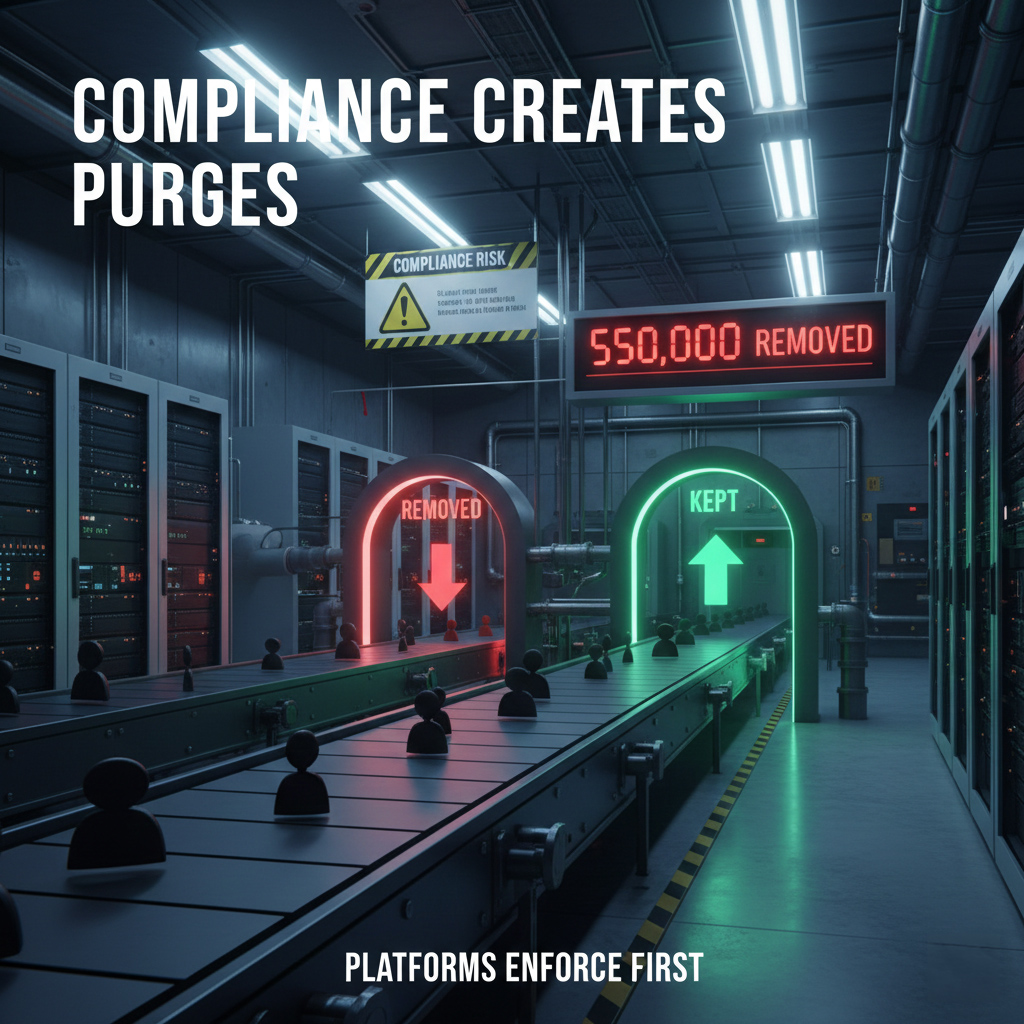
Governments demand gates. Platforms pay for systems, operations, support, and appeals.
Users pay in another currency: procedural friction—more checks, more lockouts, more mistakes, more “prove it again.”
As gates tighten, freedom doesn’t vanish in a single ban. It reappears as a price list of steps, delays, and exclusions.
Digital access is shifting from “connection” to “proof.”
Age verification is becoming the price of entry.
3-Line Summary
This article is based on publicly available reporting from international news outlets. Analysis and
interpretation were produced by Infowider’s editorial framework. No claims have been added beyond
what is supported by the cited sources.


