Physical Address
304 North Cardinal St.
Dorchester Center, MA 02124
Physical Address
304 North Cardinal St.
Dorchester Center, MA 02124
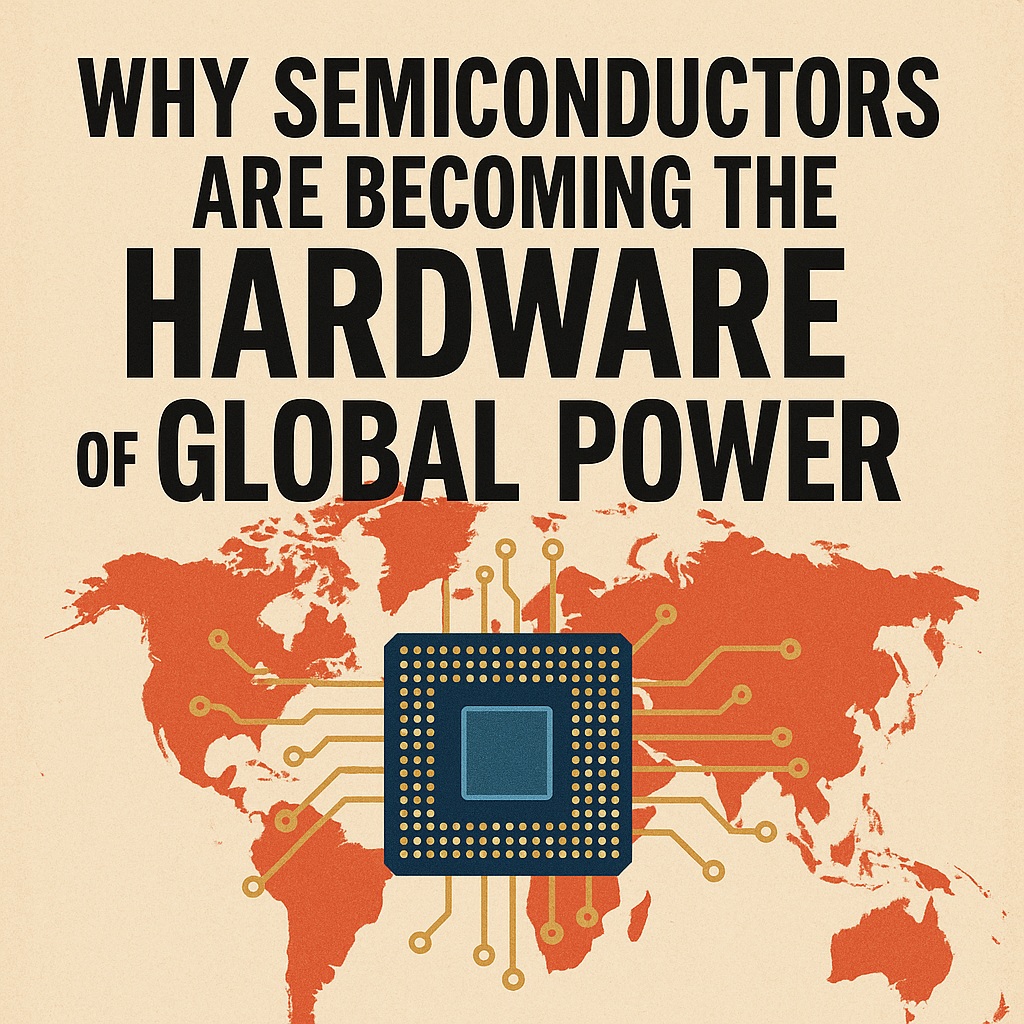
AI is no longer a technology sector — it is a force that restructures military command, capital allocation, and national decision speed. Where oil powered tanks and industries, chips now power intelligence, autonomy, and strategic reach. A state’s strength no longer lies in territory — but in compute capacity.
The five news events below appear independent. But when arranged as a sequence, they tell a single story: AI → Compute → Semiconductors → Pipeline Control → Supply Blockade → Scarcity → Power. This article connects those dots and shows why semiconductors are no longer components — but sovereignty condensed into silicon.
1) Global compute demand exploding — $1T market by 2027
AI did not become valuable — humans became dependent on cognition at scale.
📎 https://www.etnews.com/20251021000169?utm_source=chatgpt.com
2) Samsung pushes DRAM prices +60%
This is not margin expansion — it is pricing power regained through scarcity.
📎 https://www.reuters.com/world/china/samsung-hikes-memory-chip-prices-by-up-60-shortage-worsens-sources-say-2025-11-14/?utm_source=chatgpt.com
3) ASML establishes U.S. lithography academy
America is not buying equipment — it is internalizing talent as national capacity.
Not a fab, but a workforce — that’s the foundation of U.S. chip power.
📎 https://www.reuters.com/world/asia-pacific/asml-launches-technical-academy-phoenix-train-in-demand-engineers-2025-11-20/?utm_source=chatgpt.com
4) Ex-TSMC executive under security investigation
No longer a corporate dispute — engineer mobility = risk to national advantage.
📎 https://www.reuters.com/world/asia-pacific/taiwan-prosecutors-investigate-ex-tsmc-executive-chip-security-concerns-2025-11-20/?utm_source=chatgpt.com
5) CHIPS Act proposes 10-year ban on Chinese fab tools
Policy has evolved beyond trade — it is now containment doctrine.
📎 https://economictimes.indiatimes.com/news/international/us/chinese-semiconductor-tools-targeted-in-new-us-bill-heres-why-chips-act-recipients-could-be-affected-soon/articleshow/125471809.cms?from=mdr
| Old Power | New Power |
|---|---|
| Oil → Industrial expansion | Chips → Compute expansion |
| Nuclear → Deterrence | GPUs/HBM → Automated military intelligence |
| Currency → Financial authority | Compute → Decision-making authority |
Nations are no longer racing to acquire land but to scale FLOPS, TOPS, wafer throughput, and HBM bandwidth. Adding soldiers shifts war slowly — adding GPUs shifts war immediately. Chips compress time, accelerate intelligence, and define deterrence capacity.
AI → Compute → HBM → Lithography → Packaging → Power + Cooling
The semiconductor war is not about manufacturing alone — it is about securing every link of this pipeline.
The five headlines are not isolated news —they are coordinates of a shifting world order.
What looks like separate events is, in reality, a convergence toward compute sovereignty.
The conclusion is clear. Power no longer comes from land —it comes from compute.
Oil once moved tanks and empires; now chips move intelligence and speed.
Those who read semiconductors will read the future. Those who ignore them will live in someone else’s tomorrow.
Data Source Notice
This article is based on openly available news content collected through the GDELT Global Knowledge Graph (GKG). Tone metrics, metadata, and semantic clusters were processed using Infowider’s proprietary analysis pipeline. No information beyond what is contained in the original articles and GDELT data has been added.


