Physical Address
304 North Cardinal St.
Dorchester Center, MA 02124
Physical Address
304 North Cardinal St.
Dorchester Center, MA 02124
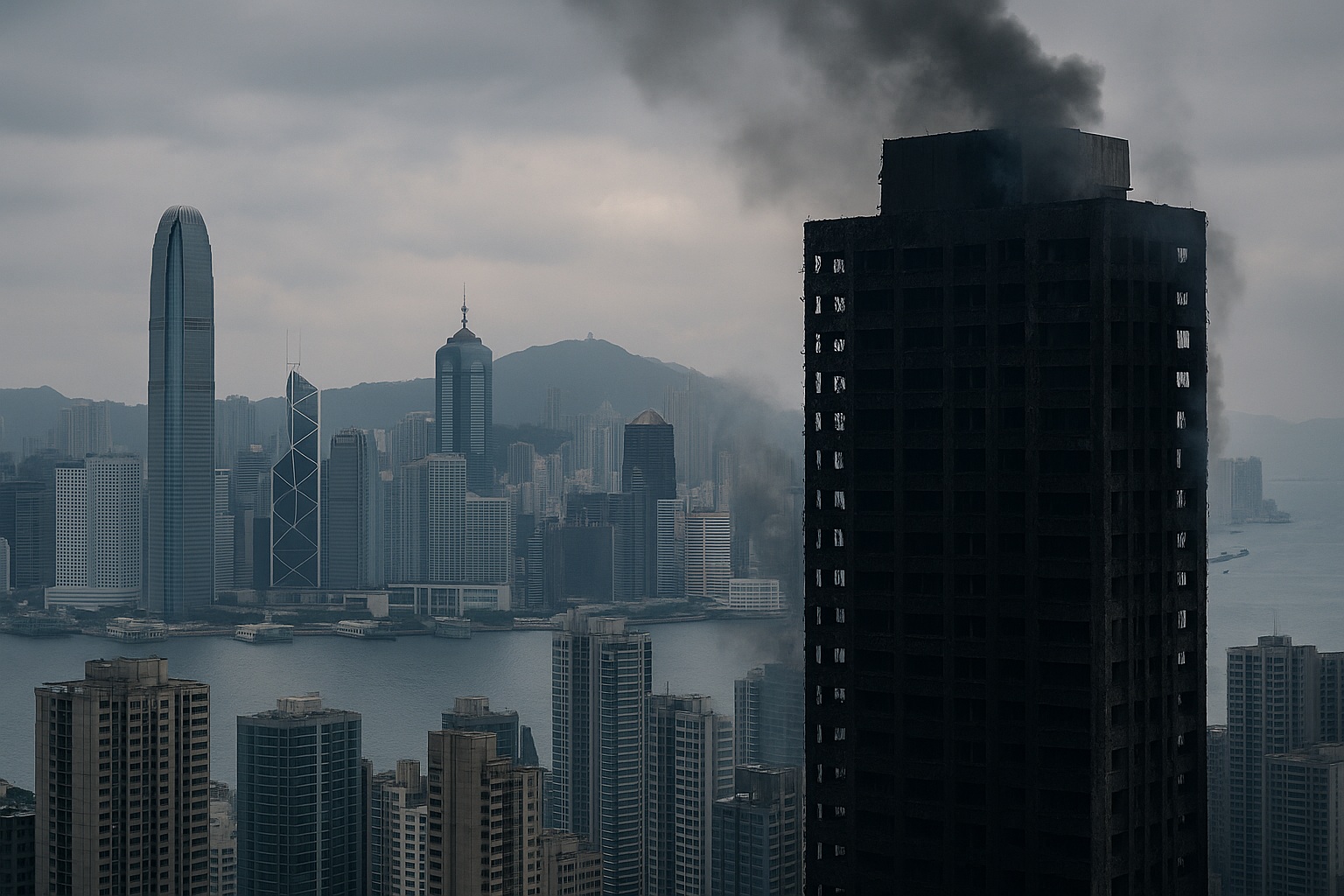
The bigger problem isn’t the fire itself, but how a city became a place where such a disaster was even possible.
On the surface, it looks like a residential fire. But once you look closer, the first question that comes up is simple: “How did it get this catastrophic?”
Residents had filed complaints for more than a year about the flammable green netting, and the labor department somehow managed 16 inspections without a single meaningful action.
This wasn’t about missing regulations—Hong Kong had them. The real issue was that the institutions meant to enforce those rules had already stopped behaving like watchdogs.
That’s where the story really starts.
Investigators later found that seven samples of the netting failed fire-resistance tests, yet the contractor pushed ahead anyway. Under normal enforcement, that should have triggered a shutdown.
Instead, it got waved through again and again.
And the aftermath said even more: a few construction executives were arrested for show, while the agencies responsible for oversight slipped straight past accountability.
People who simply asked questions online were detained for “sedition.” Mourning was tolerated; demanding answers was not.
That tells you exactly what kind of system this is — one that manages criticism more aggressively than it manages safety.
Across the reporting, the same pattern keeps repeating.
Flammable materials that failed tests.
Sixteen inspections with no results.
A full year of ignored complaints.
A crackdown on criticism instead of a reckoning.
Individually, you could call these mistakes. Put together, they look like a system that has been re-wired to notice nothing and correct nothing — a system where oversight doesn’t collapse accidentally; it fades in the exact places where power prefers silence.
What looks like a construction failure is, underneath, a political redesign.
That’s how tragedies stop being accidents and start becoming patterns.
A city doesn’t choose danger on its own. Danger accumulates from the logic that governs it.
And for years now, Hong Kong has lived under a system where control outranks safety, and silence outranks responsibility.
The fire didn’t create that reality; it exposed it.
The flames are out, but the incentives that produced them haven’t changed.
Whether Hong Kong recovers depends on whether its leaders confront the causes instead of burying them.
That choice will determine the kind of city Hong Kong becomes from here.
Data Source Notice
This article is based on openly available news content collected through the GDELT Global Knowledge Graph (GKG). Tone metrics, metadata, and semantic clusters were processed using Infowider’s proprietary analysis pipeline. No information beyond what is contained in the original articles and GDELT data has been added.


