Physical Address
304 North Cardinal St.
Dorchester Center, MA 02124
Physical Address
304 North Cardinal St.
Dorchester Center, MA 02124

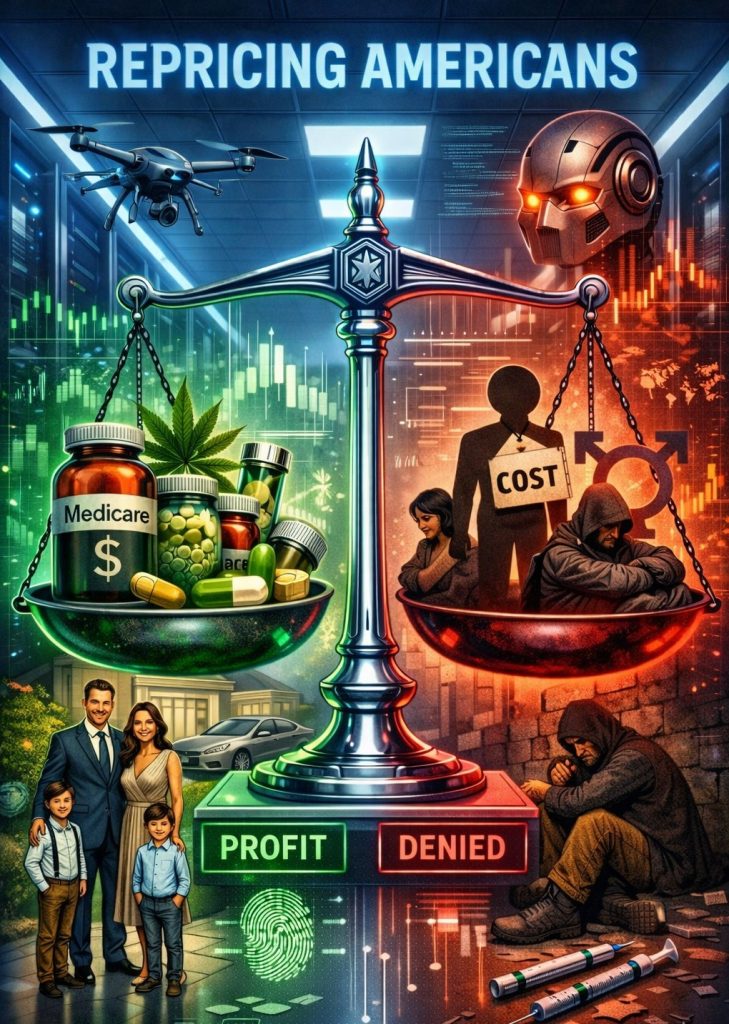
On December 18, 2025, the Trump administration reclassified marijuana from Schedule I to Schedule III. This did not move the substance toward freedom. It moved it from criminal law into the accounting systems of insurance, pharmaceuticals, and medicine. Allowing Medicare to reimburse CBD-based treatments formally enrolled cancer patients and the elderly as revenue-generating clients of the state. Marijuana was not released. It was entered into the national ledger.
In the past, citizenship was evaluated by whether someone paid their debts. Today, it is evaluated by whether someone generates lifetime fiscal value. Marijuana patients, the elderly, and the chronically ill are now high-LTV assets, producing insurance claims, prescriptions, drug revenue, and research funding. Transgender minors, the homeless, and the disabled are classified as low-LTV populations, generating cost, controversy, and political risk. This distinction is not moral. It is accounting.

Cutting Medicare and Medicaid coverage for transgender care is not a ban. It is a denial of payment. In a modern system, being removed from insurance means being rejected by hospitals, doctors, and pharmacies simultaneously. The state can then say: “We did not prohibit anything. It simply was not profitable.” This is governance through strategic abdication of responsibility.
The removal of transgender education from Texas medical schools and the weakening of syringe-exchange programs follow the same logic. These bodies have been reclassified as assets unworthy of insurance coverage. The resulting costs — infection, suicide, underground treatment — are pushed onto families and local communities. Meanwhile, the marijuana industry is absorbed into a federally protected revenue ecosystem.
Trump’s AI executive order weakens state-level rules on algorithmic discrimination and transparency in favor of federal control. This is not simply corporate protection. It is the centralization of the power to decide who is economically valuable — across credit, employment, insurance, healthcare, and policing. In this system, data becomes an irreversible digital caste mark. In the past, identities could be laundered. In an algorithmic value society, data becomes destiny.

Laws can be challenged. Courts can be fought. But algorithmic rejection and insurance denial have no visible opponent. Power is no longer exercised through verdicts but through the word “Denied” on a screen. Citizens are no longer voters. They are subscribers.
One question remains.
Are you a profit or a cost to this system?
Before it assigns you a price, what defenses do you have?
This article is based on publicly available news content collected through the GDELT Global Knowledge Graph (GKG).
Tone metrics, metadata, and semantic clusters were processed using Infowider’s internal analysis pipeline.
No information beyond what is contained in the original articles has been added.


