Physical Address
304 North Cardinal St.
Dorchester Center, MA 02124
Physical Address
304 North Cardinal St.
Dorchester Center, MA 02124
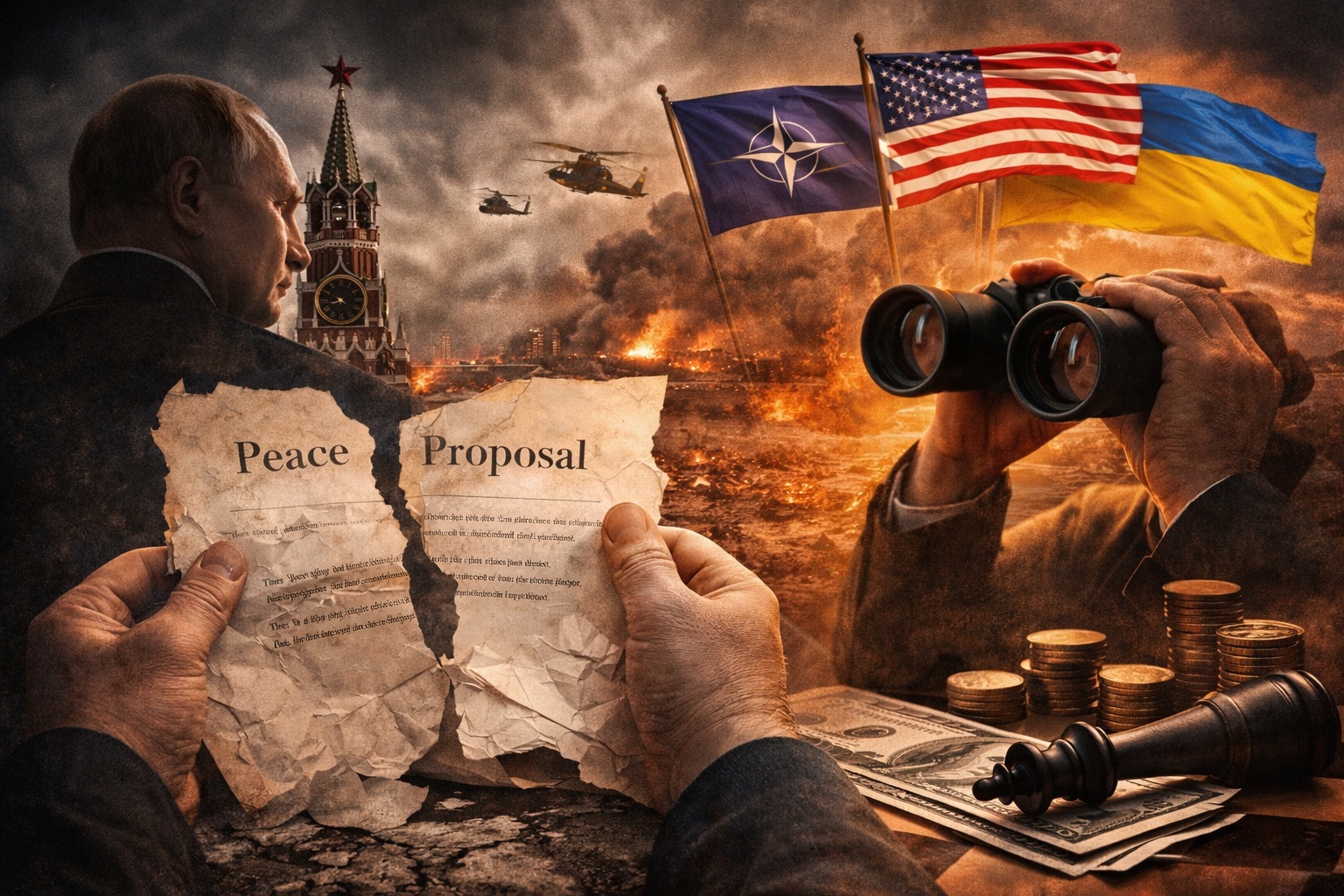
The United States and Ukraine released a new peace framework consisting of 20 provisions. This document, covering military deployment, security guarantees, territorial questions, and NATO status, was an attempt by the West to define the next phase of the war.
But the Kremlin’s response moved in the opposite direction. Putin received the document through contacts with a U.S. envoy, and the Kremlin officially confirmed that fact. However, it disclosed neither the contents, nor the format, nor any evaluation.
“We do not communicate through the media.” “The Americans already know Russia’s position.”
Russia did not merely withhold its words; it converted silence itself into a diplomatic asset.
In diplomacy, statements are price tags. The moment a country declares what it demands or accepts, it limits its own negotiating space.
The Kremlin rejected that rule.
While the West published a peace proposal, Russia published nothing, forcing its opponents to calculate their own uncertainty.
Europe worries about reconstruction costs. Ukraine doubts its security guarantees. The United States manages cracks in its alliances.
Russia pushed all of that burden into silence.
Putin’s conditions have not changed. The transfer of eastern Donbas. The abandonment of NATO. Recognition of occupied territory. This is the endpoint Russia has always demanded.
But Russia no longer states these conditions directly. Instead, it lets the West speculate about them, and fight internally over those speculations.
The side that does not speak now controls the price of the negotiation.
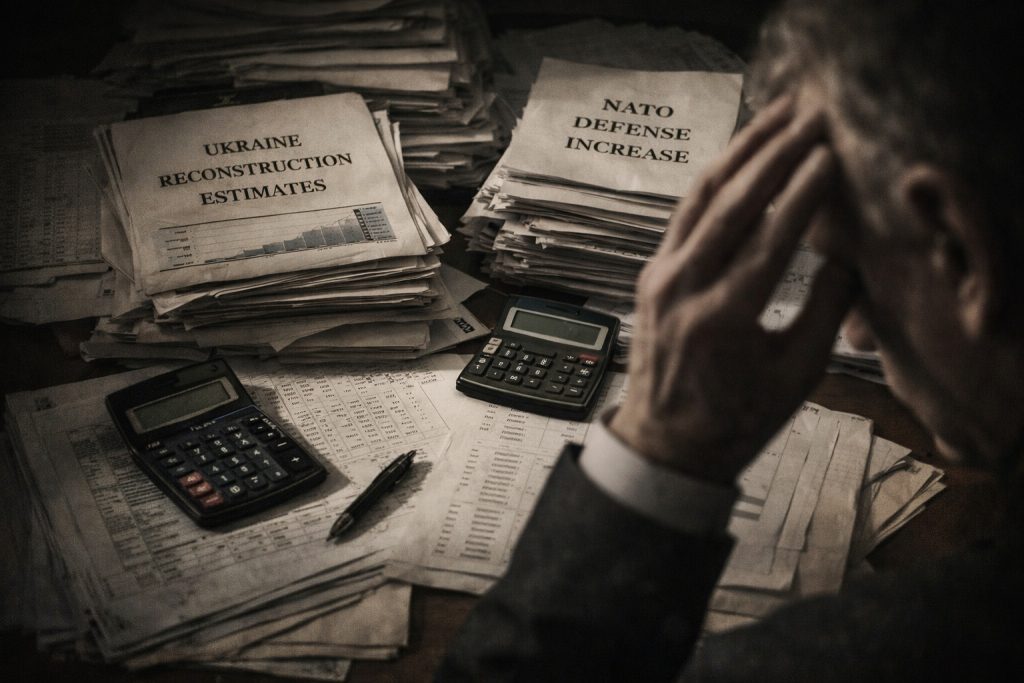
What is being discussed is not territory. It is who will rebuild Ukraine. Who will sustain its army. Who will guarantee NATO’s eastern frontier.
Russia is trying to transfer those costs to the West. And the most effective tool for doing so is uncertainty.
Silence is cheaper than weapons. Anxiety lasts longer than sanctions.
Russia did not reject peace. But it did not publish the terms of peace either.
As a result, negotiations left the diplomatic table and moved into the West’s internal financial, political, and alliance calculations.
The clauses of the Western peace plan are mostly political decoration. What is actually being traded is not the numbers on paper, but the cohesion of the Western alliance and the credibility of the dollar-based security system. The moment Russia stopped speaking, negotiation ceased to be diplomacy and became an internal Western balance sheet.
Russia’s silence is not a tactic. It is price manipulation of the Western system.
The less Moscow says, the more Washington and Brussels are forced to run internal calculations about Ukraine’s future. Those calculations are no longer military — they are fiscal, monetary, and political.
In this structure, Russia is not trying to end the war. It is shifting the cost of the war onto Western balance sheets. The battlefield may pause, but alliance cohesion and dollar credibility are being traded every day.
When trading with silence, what matters is not negotiation skill, but who is forced to open their financial statements first.
This article is based on publicly available news content collected through the GDELT Global Knowledge Graph (GKG).
Tone metrics, metadata, and semantic clusters were processed using Infowider’s internal analysis pipeline.
No information beyond what is contained in the original articles has been added.


