Physical Address
304 North Cardinal St.
Dorchester Center, MA 02124
Physical Address
304 North Cardinal St.
Dorchester Center, MA 02124

People still think a visa is permission to enter a country.
A stamp in a passport. A piece of paper that allows you to stay.
As of 2026, that understanding is obsolete.
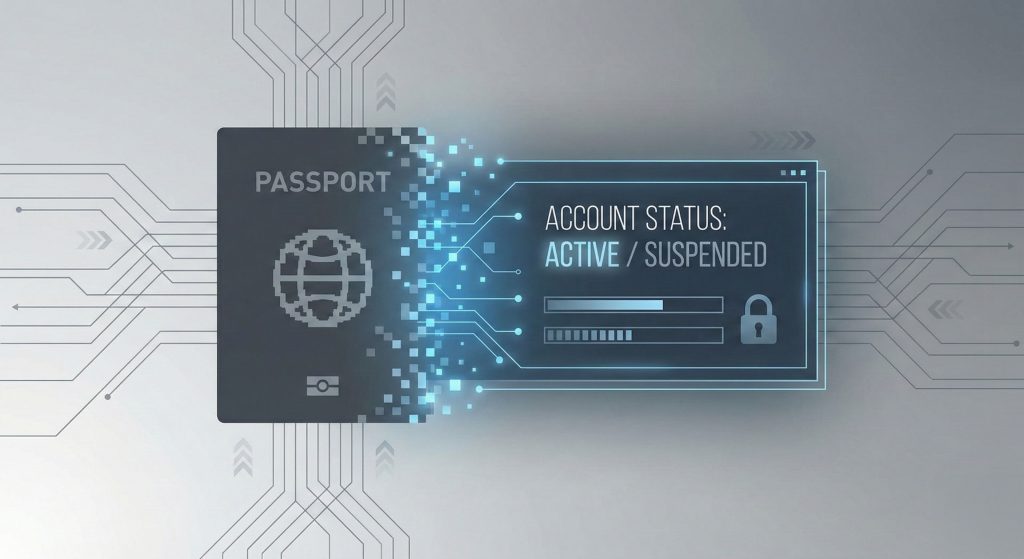
A visa is not a right. It is a status value.
More precisely, a visa is a paid account that grants access to the U.S. sovereign operating system.
When account policy changes, yesterday’s active status is suspended instantly.
Individual effort and achievement exist entirely under the authority of the system operator.
In January 2026, the U.S. State Department indefinitely halted immigrant visa processing for citizens of 75 countries.
This was not a travel ban.
Non-immigrant visas for tourism or short-term stays formally remained in place.
The United States shut down only one thing.
The path to permanent settlement.
The stated reason was “reviewing screening procedures.”
The real action was different.
Populations likely to generate welfare, healthcare, and public-safety costs were removed at the administrative system level.
This was not border enforcement.
It was a system-level power switch turned off.
During the same period, the United States revoked more than 100,000 existing visas.
A year-over-year increase of over 150%.
This matters because these people were not terrorists.
They were individuals with everyday criminal records—DUI, assault, theft.
In other words, people who generated small but recurring social costs.
Student visas and professional visas were not exempt.
Legality is no longer protection.
A visa is not a right.
It is a temporary license that can be revoked at any time.
The core criterion of this policy is not security.
It is accounting.
The State Department was explicit:
groups that rely excessively on public assistance represent an unacceptable burden on U.S. taxpayers.
Visa screening no longer asks:
Is this person good?
Is this person hardworking?
It calculates only one thing:
Does this person bring money into the U.S.,
or take it out?
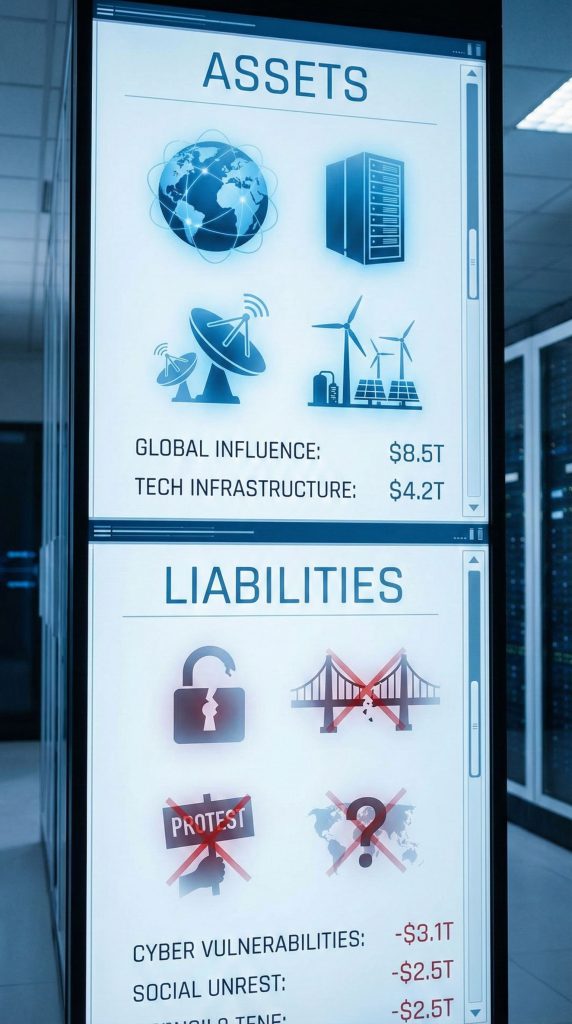
Poor countries are classified as potential liabilities,
and their citizens lose mobility itself.
The United States activated the Continuous Vetting Center.
Screening no longer ends at the port of entry.
Criminal records, financial transactions, social media activity, protest participation, and daily behavioral data are continuously synchronized.
The border is no longer a line.
It is a point.
The moment you swipe a card.
The moment you post online.
The moment you turn on your phone—
that point becomes a checkpoint.
A visa binds everyday life
in real time to U.S. legal jurisdiction.
On the list of 75 countries facing visa freezes,
Pakistan and Bangladesh were included.
India was excluded.
This difference is not diplomacy.
It is not morality.
It is financial calculation.
Indian immigrants are concentrated in high-income technical roles.
They pay taxes and have low welfare dependency.
They are classified as assets.
Countries on the list show higher statistical reliance on public assistance.
They are classified as liabilities.
The United States made its choice explicit.
It accepts tax contributors.
It removes tax consumers.
Nationality is now a credit rating.
A staff member of the New York City Council
was detained by ICE for visa overstay violations.
He was integrated into the local community.
The city labeled itself a sanctuary.
The federal government neutralized that protection with a single visa status check.
The core issue was not the arrest.
It was federal jurisdiction overriding local autonomy through visa control.
Visa status outranks municipal protection.
The visa system is not humanitarian. It is accounting.
A U.S. visa is no longer permission—it’s an account.
It can be activated, monitored, or revoked based on cost and risk.
Mobility is managed as accounting under federal jurisdiction.
This article is based on publicly available reporting from international news outlets. Analysis and interpretation were produced by Infowider’s editorial framework. No claims have been added beyond what is supported by the cited sources.


