Physical Address
304 North Cardinal St.
Dorchester Center, MA 02124
Physical Address
304 North Cardinal St.
Dorchester Center, MA 02124
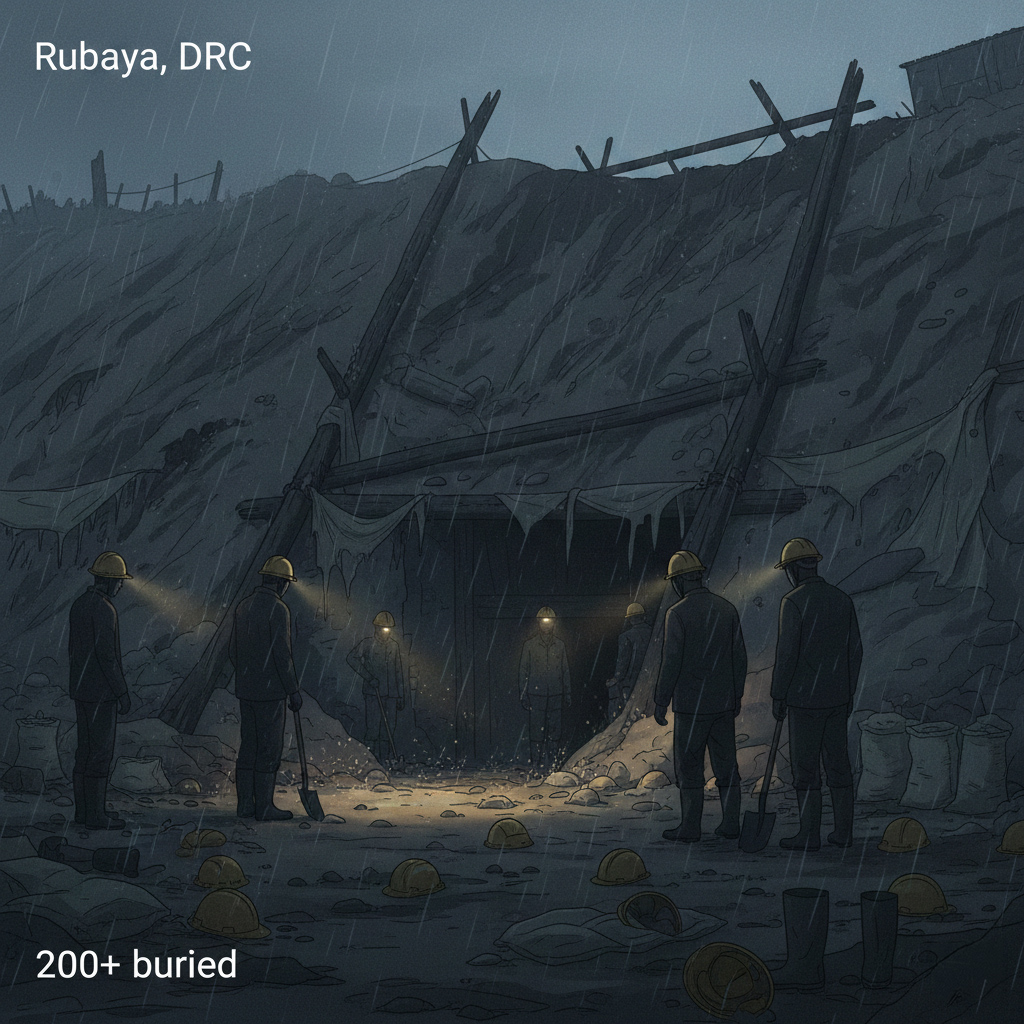
A tunnel collapse at a mine in Rubaya, eastern Democratic Republic of Congo, killed at least 200 miners who were buried underground.
Initial reports pointed to heavy rainfall and a landslide.
Rain explains timing, not causation.
It acted as a trigger, not as the underlying reason.
The collapse followed from vulnerabilities already embedded in the structure.
Rubaya accounts for roughly 15 percent of global coltan supply.
Coltan is refined into tantalum, a material used in smartphones, laptops, and automotive electronic components.
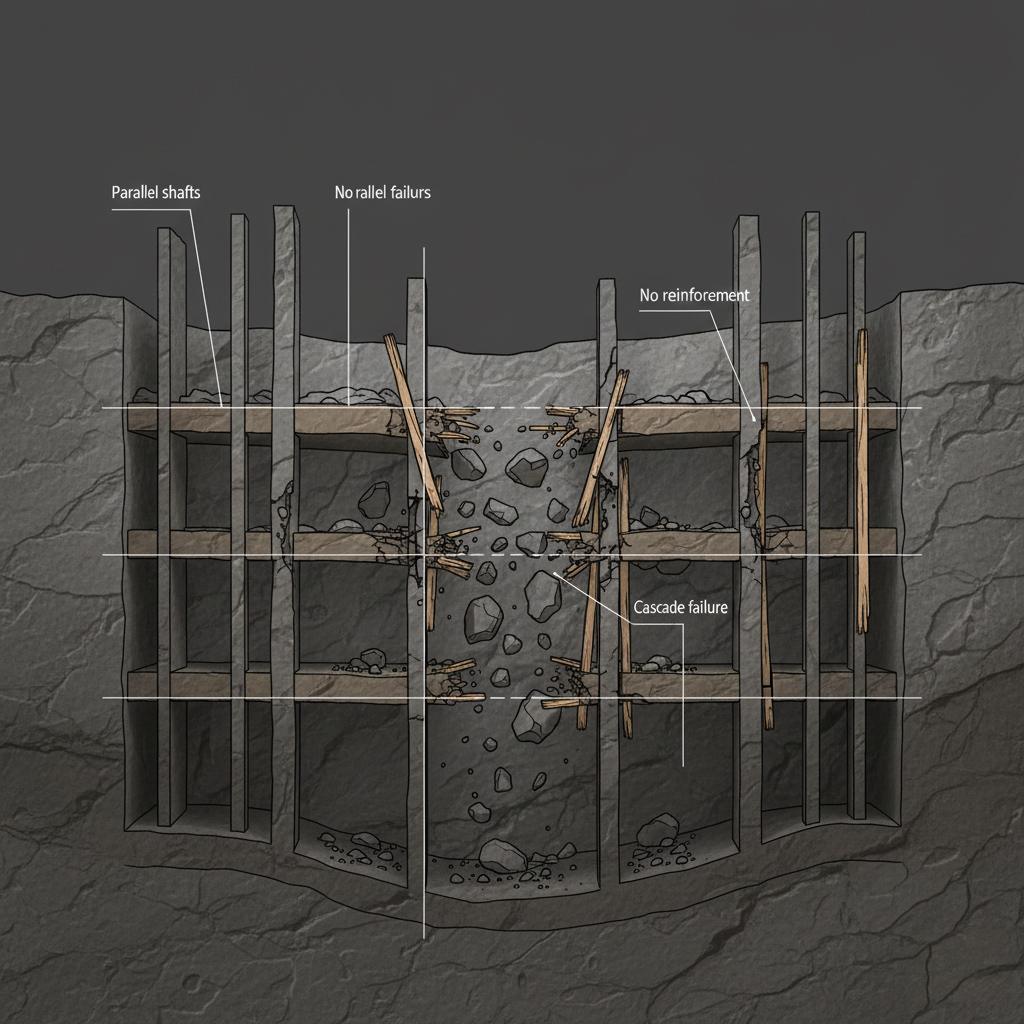
At this site, tunnels were dug vertically without structural supports, ground reinforcement, or evacuation planning.
Multiple shafts were excavated in parallel, creating conditions where a single failure could propagate into a wider collapse.
Under such conditions, rainfall was not an anomaly.
It was the event that activated an already unstable system.
The Rubaya mine lies in territory controlled by the M23 armed group.
According to United Nations reporting, the group generates approximately $800,000 per month from coltan extraction in this area, funding ongoing operations.
The central issue is not simply who controls the mine.
It is how costs are categorized—and which ones never enter the ledger.
Rather than being absorbed by operators or intermediaries, risk was shifted downward to individual miners.
Once transferred, that risk disappears from pricing models, balance sheets, and supply-chain disclosures.
From this perspective, the collapse was not unexpected.
It was the logical outcome of a zero-safety-cost configuration.
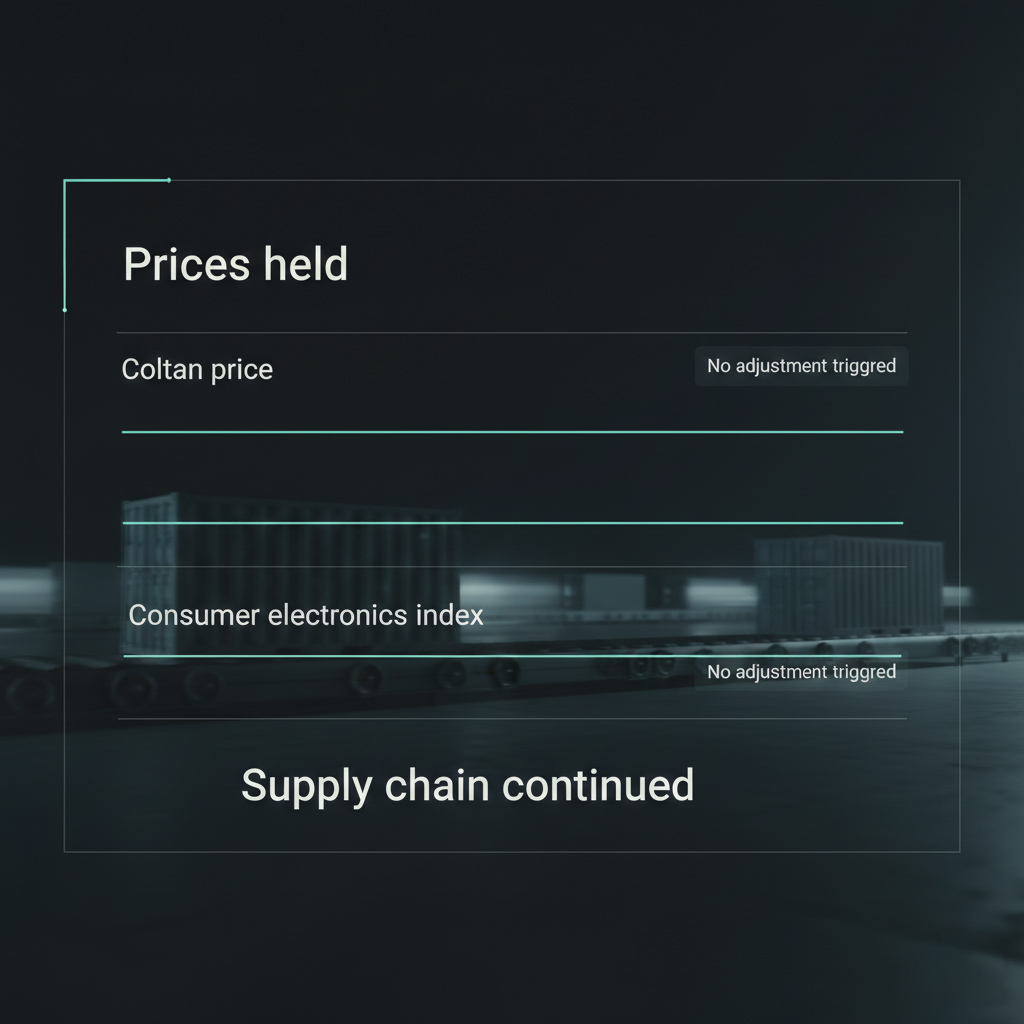
Despite the scale of fatalities, coltan prices did not spike.
Consumer electronics prices remained unchanged.
Supply chains continued operating.
This contrast is revealing.
Within the market framework, the incident was processed in the following way:
In accounting terms, the event did not appear as loss,
but as operational wear.
The mine collapsed.
The broader system did not.
No additional safety investment was immediately triggered.
No price correction followed.
No structural recalibration occurred.
What this incident reveals is not system failure, but the threshold at which the system remains economically indifferent.
At this scale of human depletion,
the existing configuration remained economically viable.
Extraction resumed.
Prices held.
The underlying structure persisted unchanged.
This was not a natural disaster, nor a moral episode.
It was an observable case of how unaccounted costs are processed.
When loss does not appear as cost,
the system has no reason to pause.
The Rubaya mine collapse was not caused by rain, but by a system that structurally excluded safety costs from its operations.
The deaths of 200 miners were not registered as economic loss, leaving prices, supply chains, and investment behavior unchanged.
When loss does not appear as cost, the system has no reason to pause.
This article is based on publicly available reporting from international news outlets. Analysis and
interpretation were produced by Infowider’s editorial framework. No claims have been added beyond
what is supported by the cited sources.


