Physical Address
304 North Cardinal St.
Dorchester Center, MA 02124
Physical Address
304 North Cardinal St.
Dorchester Center, MA 02124
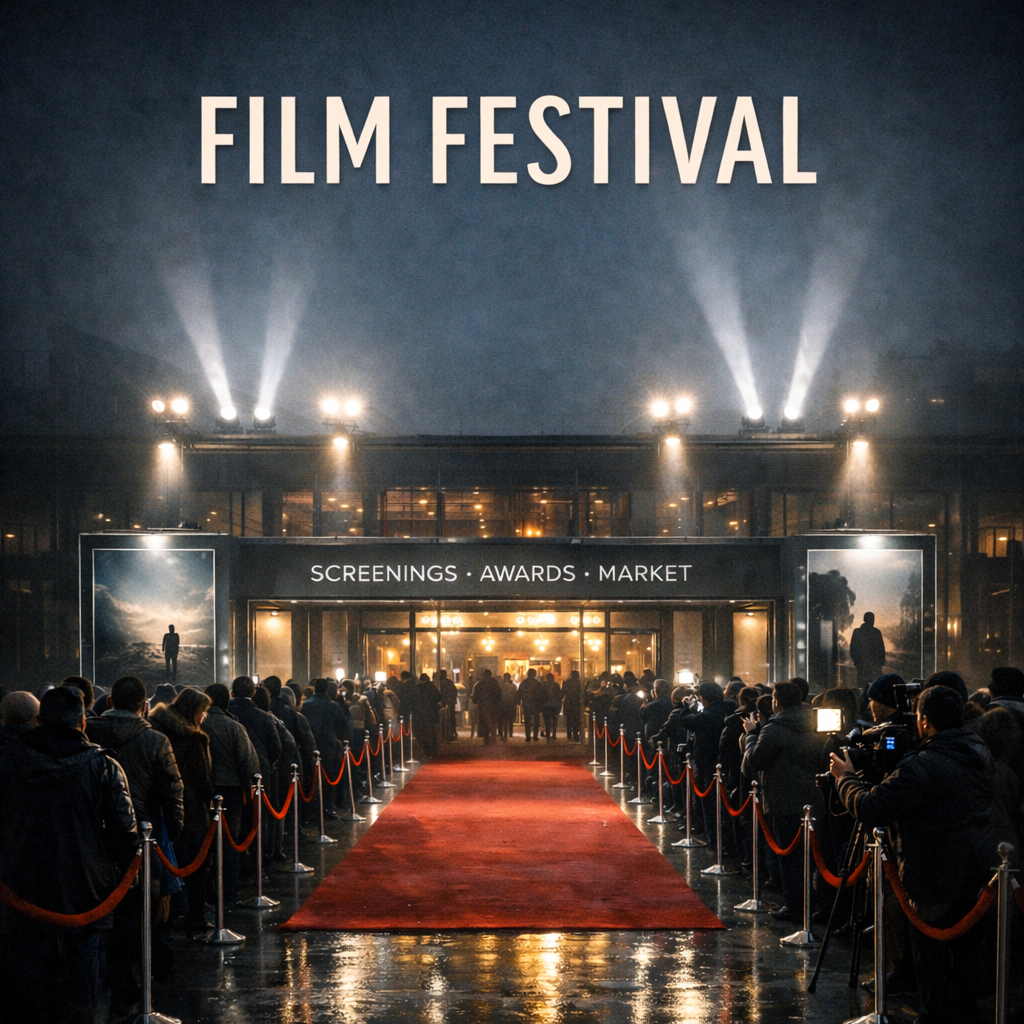
A film festival feels simple on paper. You pick films, screen them, bring directors and actors onstage, hand out awards, and keep the market moving. When that machine runs, the event can keep a respectful distance from politics and still function. But this year at the Berlin Film Festival, that simplicity broke. War doesn’t stay on the battlefield. The moment the question walks into the venue, the festival stops being judged for “the work” and starts being judged for “the stance.”
The first spark was the line, in essence, that “film should stay out of politics.” On the surface, it sounds like a defense of the festival’s core purpose. But in a climate like this, that defense gets translated instantly as “we won’t answer.” People don’t hear neutrality; they see avoidance. So the festival gets pushed from being a place that evaluates films to being a place that manages the boundaries of what can be said.
From here, the question shifts. It stops being “take a position” and becomes “why are some statements allowed while others are blocked?” The moment the boundary of speech becomes visible, the festival stops looking like a celebration and starts looking like an institution. And once it’s treated as an institution, a single sentence becomes a rule. Once it becomes a rule, silence is no longer quiet—it’s a choice.
If it’s only debate, a festival can ride it out. Festivals are noisy by nature. There are always words, always opinions. But this time, it didn’t end with words. Action showed up. Arundhati Roy’s decision to decline an invitation isn’t just a matter of being offended. It reads as a decision that the “art must be apolitical” frame functions in practice as a way of shutting down certain conversations—and that she won’t attach her name to that frame.
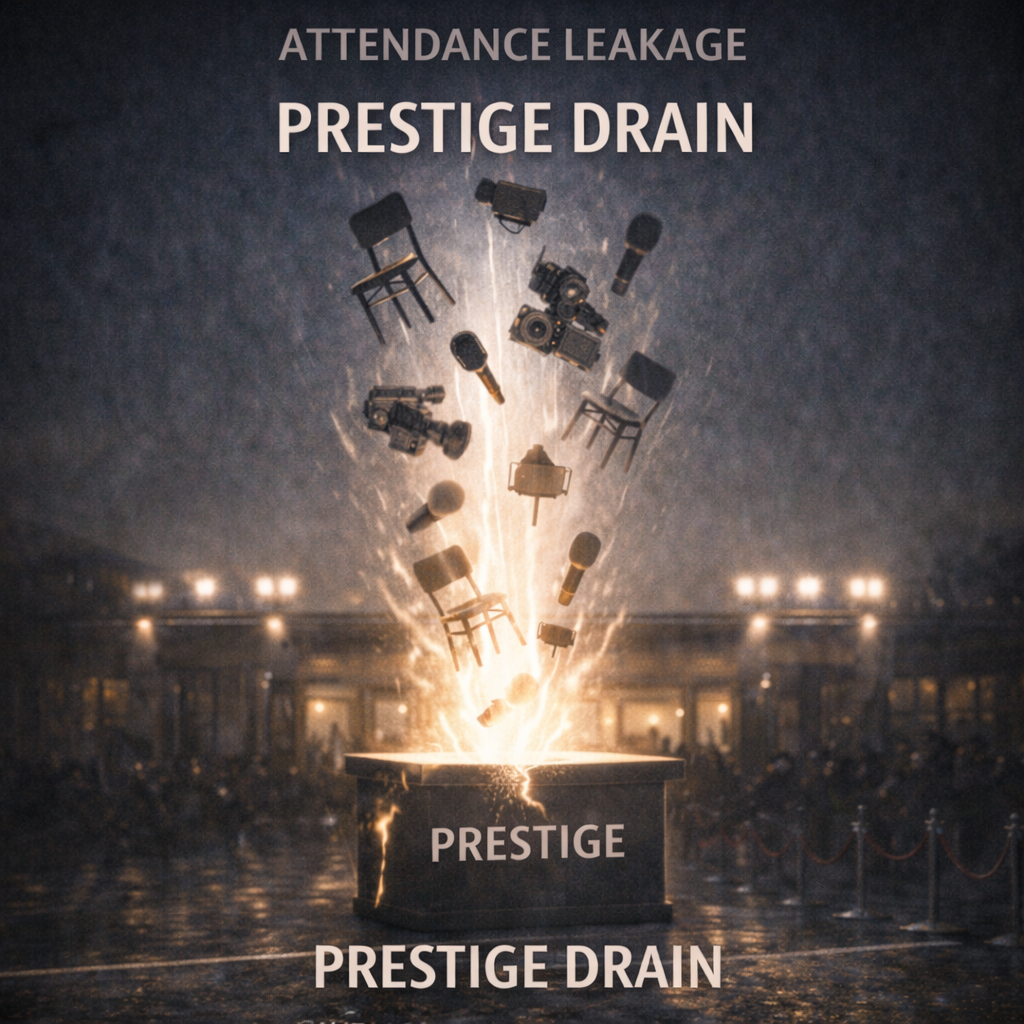
This is why absence is frightening. A festival’s authority doesn’t come from a building or a red carpet. It comes from who shows up. The moment a major figure steps away, the prestige starts to leak in ways you can’t neatly measure. The festival doesn’t bleed from headlines; it bleeds from attendance.
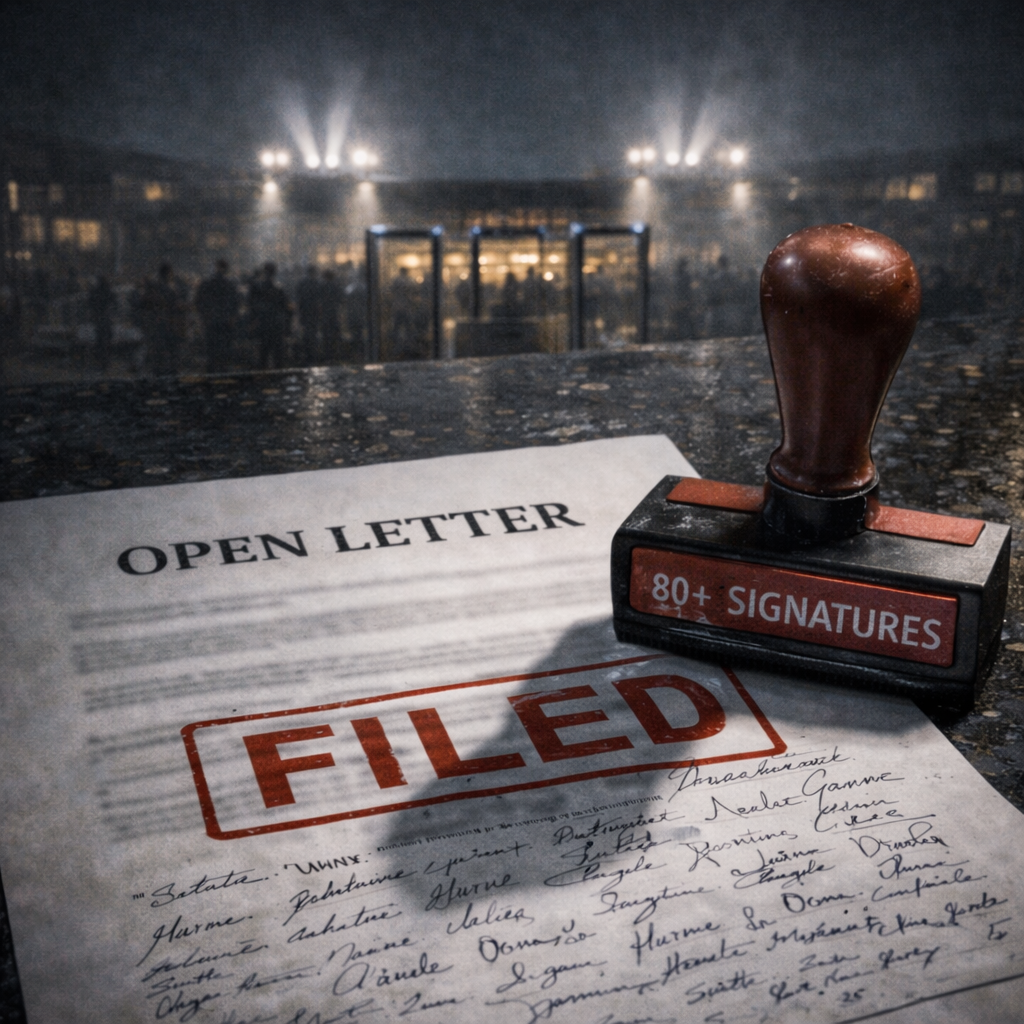
The next phase is collective organization. Once an open letter circulates with more than 80 signatures—and when names like Javier Bardem and Tilda Swinton are part of that list—it no longer looks like scattered frustration. A document has entered the room. And the moment a document exists, the argument turns from emotion into record. Records latch onto platforms.
At that point, the festival can’t dodge the questions: “Why the silence?” “Why the censorship?” If you don’t speak, the refusal to speak becomes the position. And once it becomes a position, the festival starts to look less like a place that presents films and more like a place that decides what kind of speech is permitted.
The sharpest moment hits the award system itself. Reports of a director rejecting an award and leaving the trophy behind on stage matter because awards are the festival’s strongest currency. A festival recognizes an artist; that recognition feeds the festival’s authority. But when that currency is rejected in front of everyone, it doesn’t read like a complaint—it reads like a denial of the system.
The message becomes: “Your recognition has no value to me.” From that point on, the festival isn’t just a mechanism for spotlighting work. It becomes a stage for a legitimacy contest. The award stops being celebration and turns into evidence of conflict.
The organizers push back. They deny censorship claims and argue that some accusations are inaccurate. They also draw a line with language like: they support free expression “within the bounds of German law.” That line is meant as a shield, but it makes the festival more uncomfortable.
Because the moment you invoke the legal boundary, the festival starts to look less like a host and more like an enforcer. The message people hear is simple: the law and the political rules come first, and the festival is the place where those rules get applied. After that, it becomes harder to sustain the story that this is “an artistic space independent of politics.” The festival stops getting attacked as a program and starts getting attacked as a rulebook.
What creators point to isn’t only slogans. There are accounts of war halting production, forcing shoots to move locations, and shaking infrastructure and budgets. When those realities are on the table, “let’s not talk politics” can sound like an attempt to erase what’s already being paid on set. If reality is already arriving as cost, pushing it away with a “non-political” frame can snap trust.
That’s why this stops being a feelings fight and becomes a relationship break. Someone doesn’t show up. Someone signs. Someone rejects a trophy. The story moves in the way platforms fear most. The stage where you could survive with words ends, and the stage where you pay with function begins.
If you frame this as “who’s right,” it never ends. The more practical question is different: where does the cost of war get settled, and which parts of a platform does it grind down?
Berlin runs on authority, attendance, and broadcast value. And now those three start wearing down in the same direction. Absences appear. Open letters turn the festival into an institution. Rejections shake the meaning of awards. And the “legal bounds” defense makes the festival look like a rule enforcer. War doesn’t end at the front line. A cultural platform can try to avoid risk through silence, but the risk doesn’t disappear—it converts into absence and refusal, and it starts shaving off the event’s ability to function.
The moment the festival chooses restraint, the cost of war doesn’t vanish—it converts into “attendance leakage” and drains prestige from the platform.
Confidence: MED
Absences, the open letter, award rejection, and the organizers’ “within German law” line are captured within this article set, but changes in sponsorship, broadcast metrics, and audience numbers are not confirmed inside this set alone.
Falsifier
If absences, cancellations, and award refusals do not spread and the festival’s operations remain broadly normal, then the “functional damage settlement” thesis weakens.
Berlin tried to stay “apolitical,” but that restraint was read as a choice, not neutrality.
The dispute moved from words to actions—open letters, withdrawals, and refusals—turning the festival into an institution under scrutiny.
The cost of war didn’t vanish; it converted into attendance leakage and prestige drain that erodes the platform’s core function.
This article is based on publicly available reporting from international news outlets. Analysis and
interpretation were produced by Infowider’s editorial framework. No claims have been added beyond
what is supported by the cited sources.


